Post #122
Why do they fake this crap?
Some time ago, I was really taken with a particular Facebook profile.
It belonged to a guy who focused on supporting small businesses and helping homeless people.
An account with nearly 10 million followers it evoked a comforting sense of a vast community of people eager to help, expecting nothing in return.
Essentially, I spotted the first "red flag" right at the start as is usually the case but I didn't really want to listen to my gut.
His profile picture immediately struck me as AI generated. Yet, the overall concept seemed so brilliant and foolproof a strategy supposedly bolstered by the involvement of small local shops.
After all, how could someone walk around a major city, interacting with small restaurants, without the whole charade being exposed?
Next, I noticed the posting frequency. A new clip was posted every single hour.
When there’s too much of a good thing, it quickly becomes boring.
That struck me as odd: why would he deliberately devalue his own content like that?
The questions kept piling up. So, I dug a little deeper into his content and noticed that his clips were only getting around 14,000 views each.
With nearly 10 million followers and such a positive, uplifting concept, shouldn't he be attracting a much larger audience?
Could that be the explanation the reason they felt bold enough to feature so many shops that actually exist in real life?
Another striking detail was that every single clip followed the exact same formula.
He sits in a restaurant waiting for his order; then the server appears and hands him his food while standing up!
At that point, he asks if they could prepare 1,000 servings of it for him.
Naturally, the server looks bewildered and replies that 1,000 is impossible, but they could manage 30 or so. Almost invariably, the kitchen manages to whip them up in just 10 to 20 minutes!
Then comes the final act, where the servers bring out the food. They always ask him what he needs all that food for.
To which he replies: "For the homeless." Then comes the inevitable "Aww, that’s so sweet... wait a sec, let me ask the boss." Then the boss appears and says, "It’s all on the house."
What the place is actually called usually doesn't matter in the slightest; they always seem to do it purely out of love.
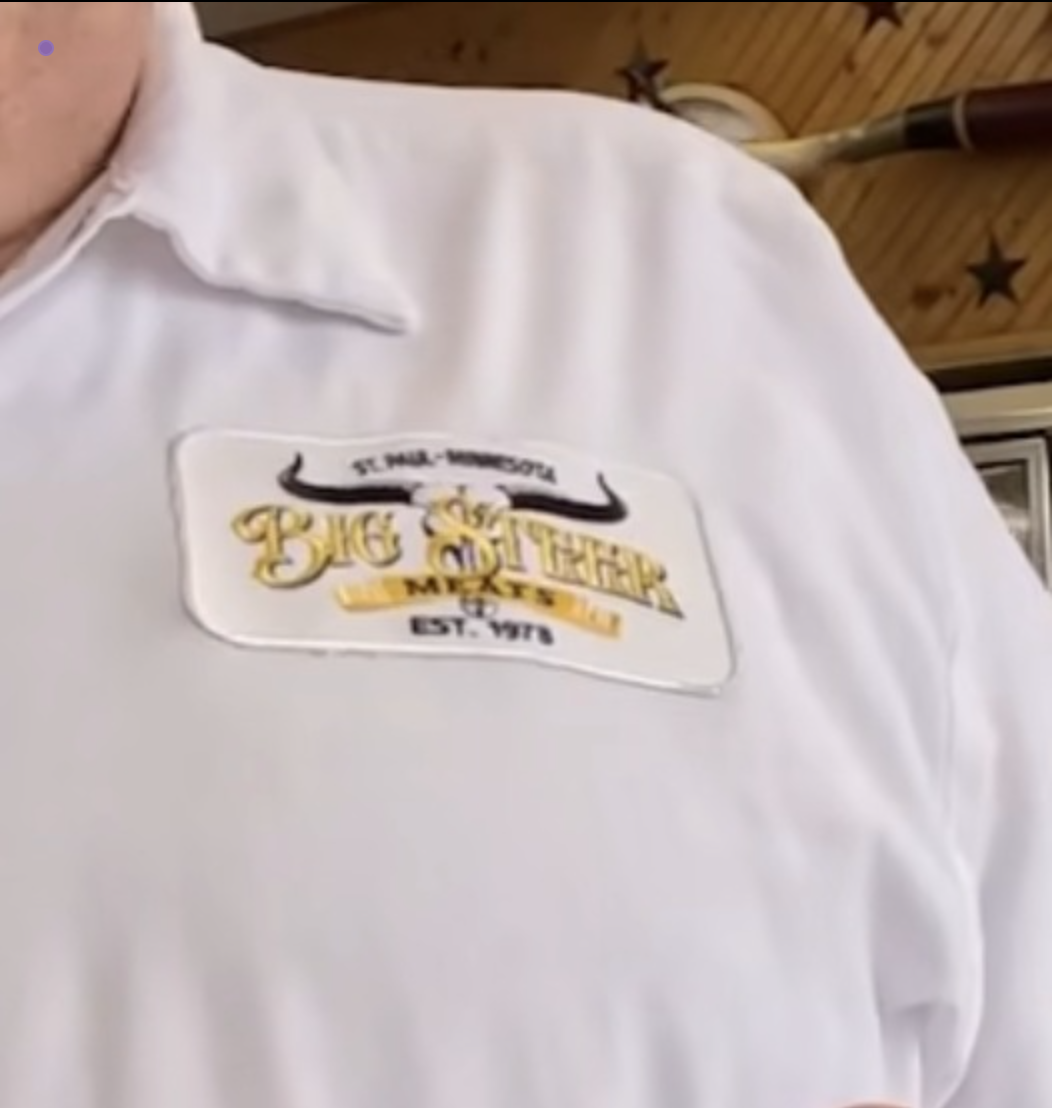
However, they can't get away with being completely nameless, either. If a restaurant happens to reveal its name, it does, of course, actually exist. Whether the owners on the website actually look the same as they do in the video clips, however, is open to debate. But I did stumble upon one clip purely by chance that featured a patch on a US style work shirt.
Those very shirts the kind I used to sell back when I worked in retail provided me with the definitive proof I needed.
No embroidery specialist or logo designer in their right mind would ever sell such shoddy work to a legitimate business.
It’s hard to spot because they are meticulous about avoiding any sequences that exhibit typical AI artifacts.
That’s why you see nothing but a rapid fire succession of cuts whenever people are speaking. That is the final red flag in this whole story: the way they edit their clips.
The whole point is supposedly to convey a sense of genuine sincerity, yet they chop up the footage as if they were making an avant-garde art film.
So, I’m left wondering: why go to such great lengths to pull off a stunt that is so easily seen through?
Some time ago, I was really taken with a particular Facebook profile.
It belonged to a guy who focused on supporting small businesses and helping homeless people.
An account with nearly 10 million followers it evoked a comforting sense of a vast community of people eager to help, expecting nothing in return.
Essentially, I spotted the first "red flag" right at the start as is usually the case but I didn't really want to listen to my gut.
His profile picture immediately struck me as AI generated. Yet, the overall concept seemed so brilliant and foolproof a strategy supposedly bolstered by the involvement of small local shops.
After all, how could someone walk around a major city, interacting with small restaurants, without the whole charade being exposed?
Next, I noticed the posting frequency. A new clip was posted every single hour.
When there’s too much of a good thing, it quickly becomes boring.
That struck me as odd: why would he deliberately devalue his own content like that?
The questions kept piling up. So, I dug a little deeper into his content and noticed that his clips were only getting around 14,000 views each.
With nearly 10 million followers and such a positive, uplifting concept, shouldn't he be attracting a much larger audience?
Could that be the explanation the reason they felt bold enough to feature so many shops that actually exist in real life?
Another striking detail was that every single clip followed the exact same formula.
He sits in a restaurant waiting for his order; then the server appears and hands him his food while standing up!
At that point, he asks if they could prepare 1,000 servings of it for him.
Naturally, the server looks bewildered and replies that 1,000 is impossible, but they could manage 30 or so. Almost invariably, the kitchen manages to whip them up in just 10 to 20 minutes!
Then comes the final act, where the servers bring out the food. They always ask him what he needs all that food for.
To which he replies: "For the homeless." Then comes the inevitable "Aww, that’s so sweet... wait a sec, let me ask the boss." Then the boss appears and says, "It’s all on the house."
What the place is actually called usually doesn't matter in the slightest; they always seem to do it purely out of love.
However, they can't get away with being completely nameless, either. If a restaurant happens to reveal its name, it does, of course, actually exist. Whether the owners on the website actually look the same as they do in the video clips, however, is open to debate. But I did stumble upon one clip purely by chance that featured a patch on a US style work shirt.
Those very shirts the kind I used to sell back when I worked in retail provided me with the definitive proof I needed.
No embroidery specialist or logo designer in their right mind would ever sell such shoddy work to a legitimate business.
It’s hard to spot because they are meticulous about avoiding any sequences that exhibit typical AI artifacts.
That’s why you see nothing but a rapid fire succession of cuts whenever people are speaking. That is the final red flag in this whole story: the way they edit their clips.
The whole point is supposedly to convey a sense of genuine sincerity, yet they chop up the footage as if they were making an avant-garde art film.
So, I’m left wondering: why go to such great lengths to pull off a stunt that is so easily seen through?